
Wood
Repairable and widely available, with many stringer and block configurations. Solid-wood packaging used in international trade may fall within ISPM 15.
Field guide 01 · Construction taxonomy
“Pallet type” can mean its structure, fork entry, bottom deck, material or treatment. Those are separate choices—and two pallets with the same footprint can handle very differently.
Generic lists often mix construction, material and treatment as if each pallet fits only one box. A more useful system keeps the axes separate.
| Axis | Common choices | What it changes |
|---|---|---|
| Structure | Stringer, block, bearer, molded one-piece | Load path, repair method and opening geometry |
| Decks and faces | Single-deck, double-deck, reversible, non-reversible | Whether a lower deck exists and which face carries product |
| Entry | Two-way, partial four-way, true four-way | Which sides accept forks and pallet-jack load wheels |
| Bottom | None, runners, overlapping boards, perimeter, cruciform, cutout panel | Racking, conveyors, stacking, stiffness and nesting |
| Deck edge | Flush, single-wing, double-wing | Usable deck area, sling handling and impact exposure |
| Material | Wood, plastic, metal, corrugated, composite | Weight, cleaning, repair, fire behavior and export treatment |
| Use cycle | Single-trip, reusable, captive, exchange, pooled | Ownership, retrieval, inspection and repair rules |
| Treatment or condition | HT, DH, MB-marked, KD, new, repaired, remanufactured | Plant-health compliance, moisture and acceptance |
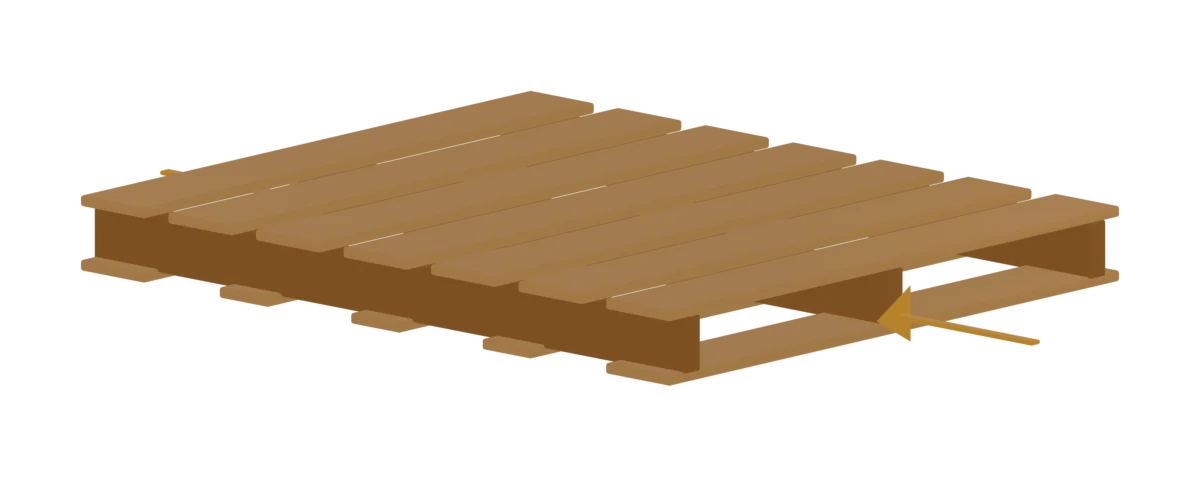
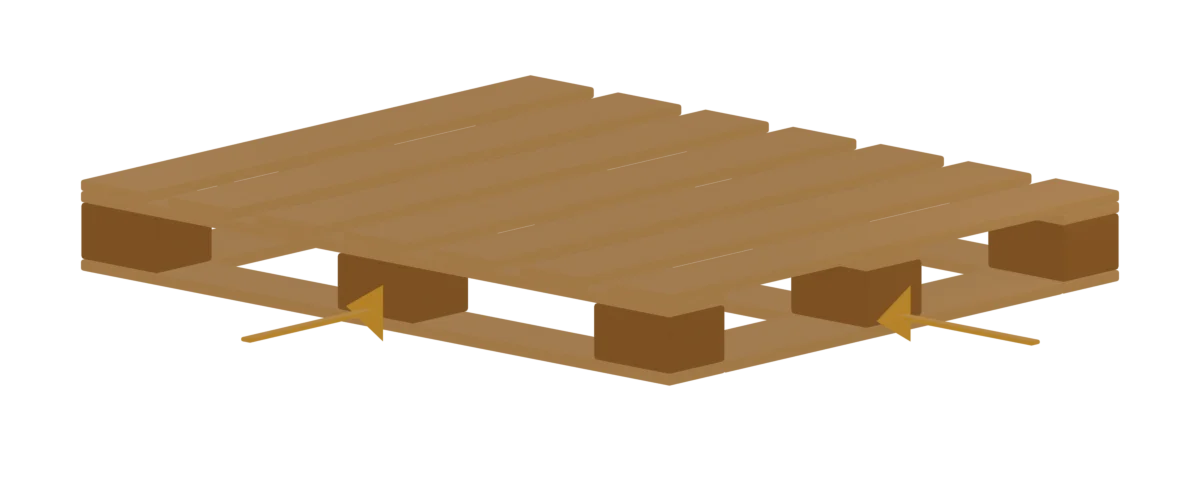
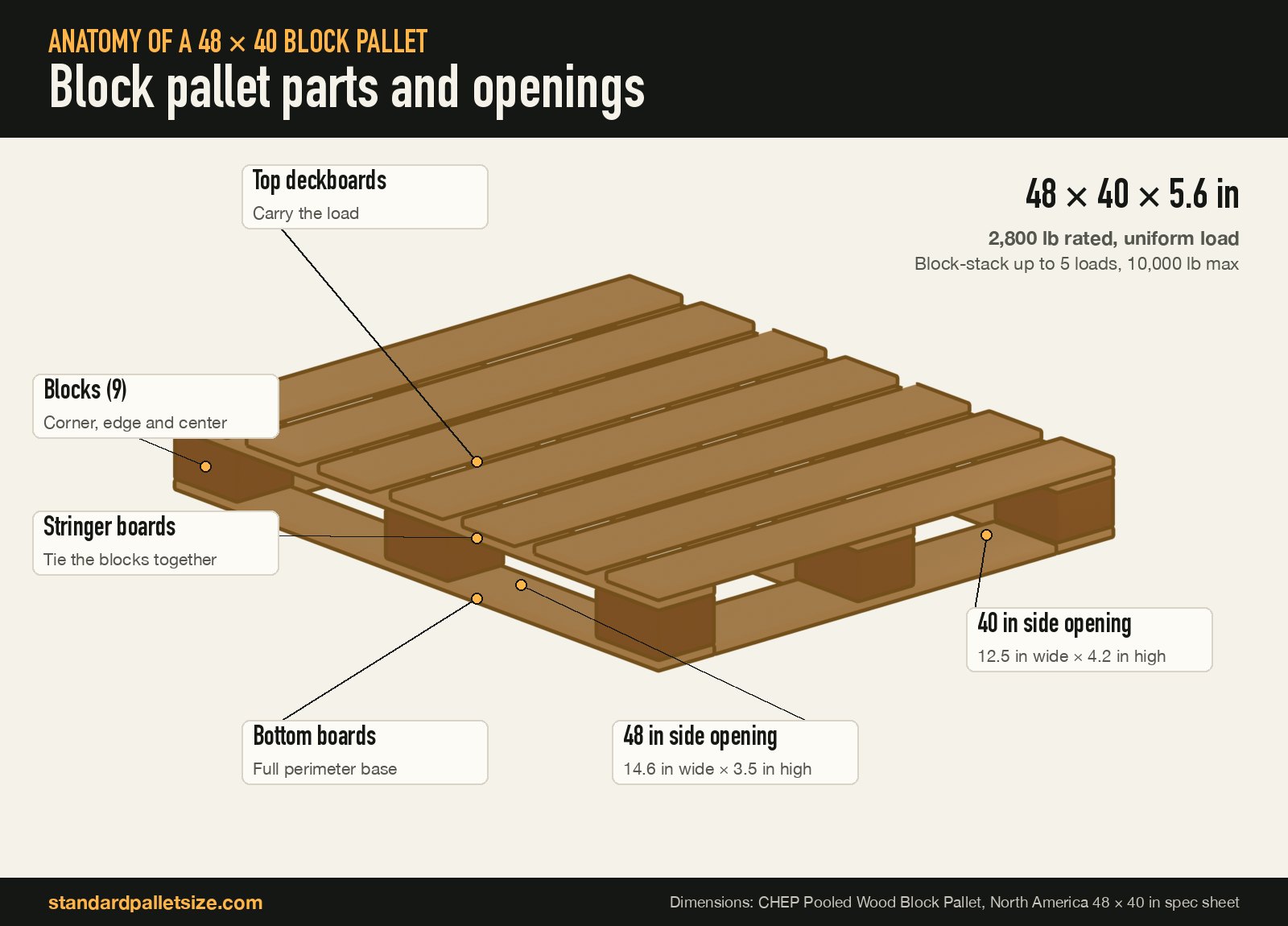
A stringer-versus-block comparison is about the load path, openings and construction—not simply which material is stronger. Ratings still belong to a named design and support condition.
A skid commonly has a top deck on runners or stringers but no conventional bottom deck. That everyday usage is useful, but suppliers do not use “pallet” and “skid” consistently. See the pallet versus skid guide before specifying one.
Entry describes where handling equipment can enter the base. Two-way pallets accept forks from two opposite sides. A notched stringer pallet may accept forklift forks from all four sides but still restrict pallet-jack wheels at the notches. That is partial four-way entry. True or free four-way entry provides openings designed for entry from every side.
The distinction matters because a forklift fork and a pallet-jack load wheel do different work. The fork only has to enter and lift. A pallet jack must also roll its load wheels through the opening and reach the floor. Our 2-way versus 4-way guide diagrams both paths.
Try these bottom layouts with a forklift and pallet jack in 3D, including overlapping boards and panels with wheel cutouts.
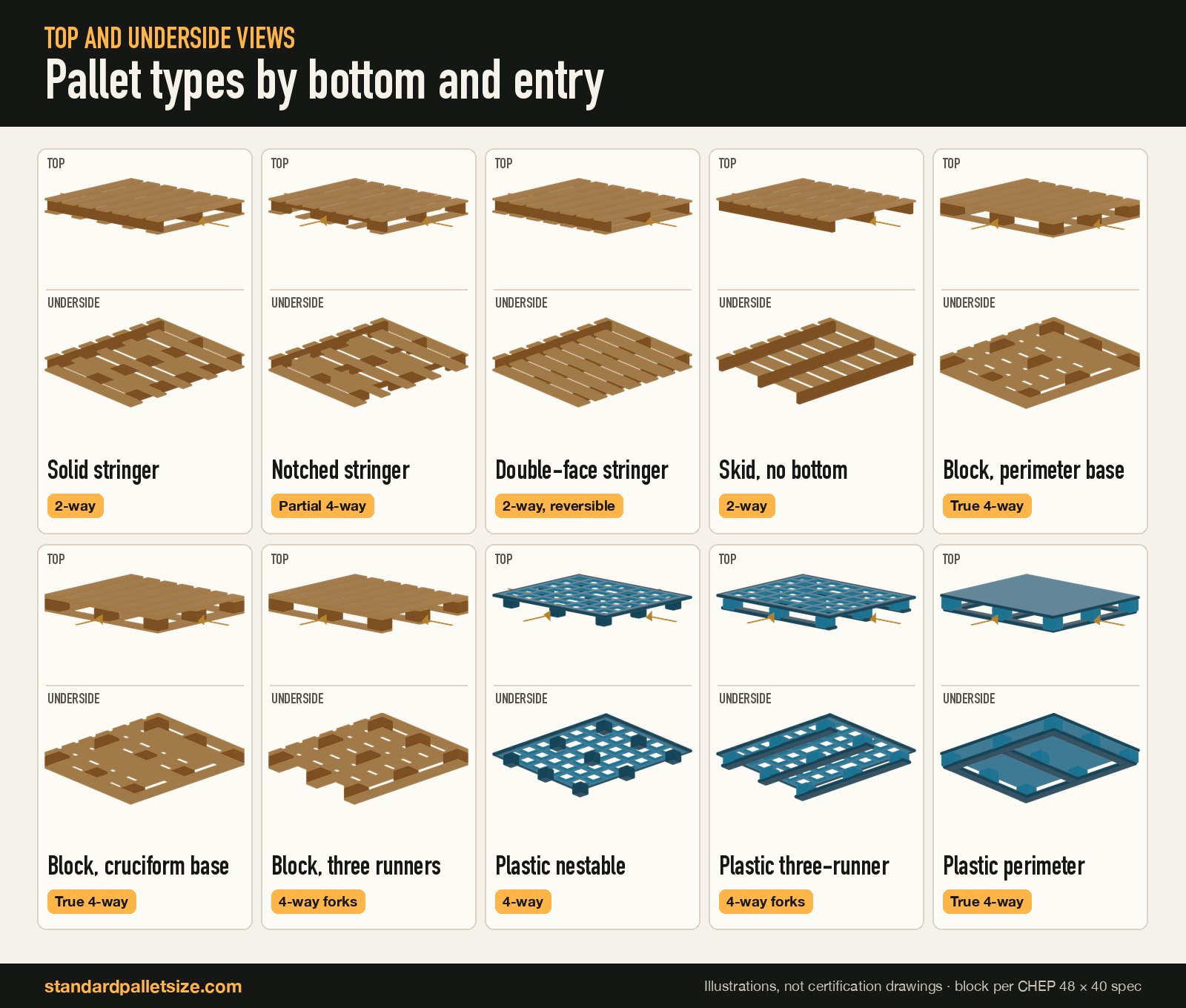
Each build is shown from above, then from underneath. The renders are illustrations of common constructions, not certification drawings; the block pallet follows CHEP’s published 48 × 40 × 5.6 in spec, including its 14.6 × 3.5 in and 12.5 × 4.2 in fork openings.
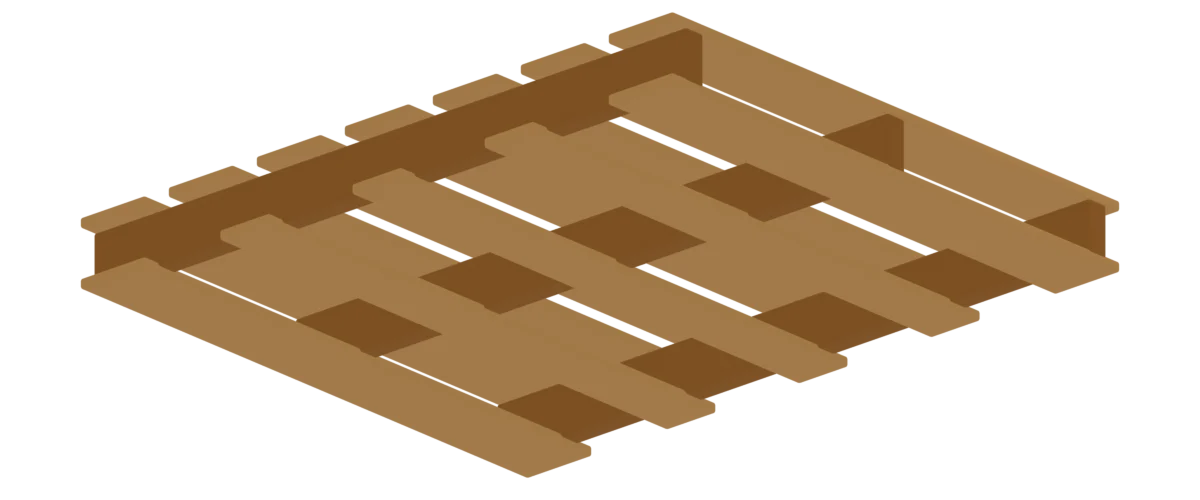
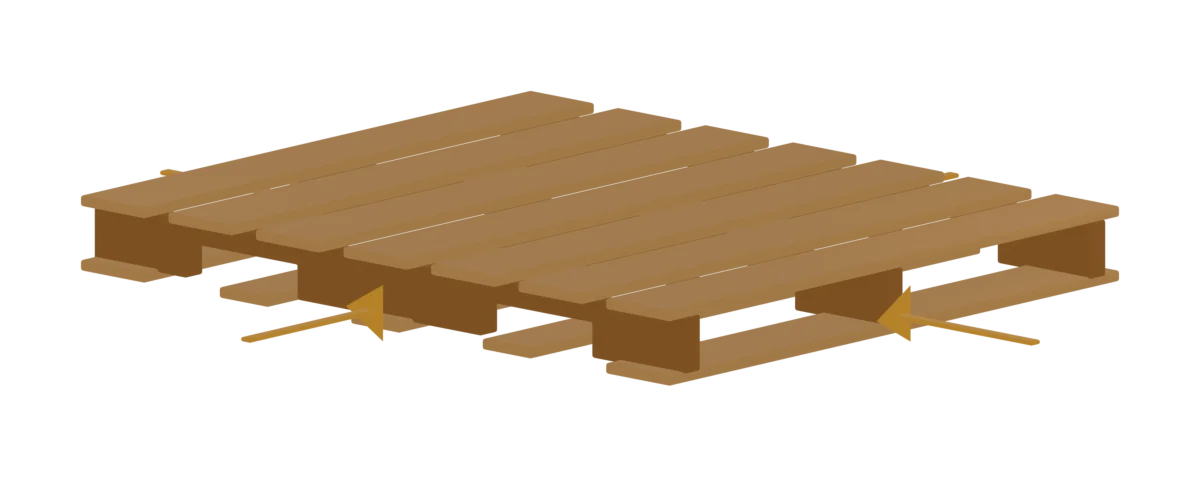
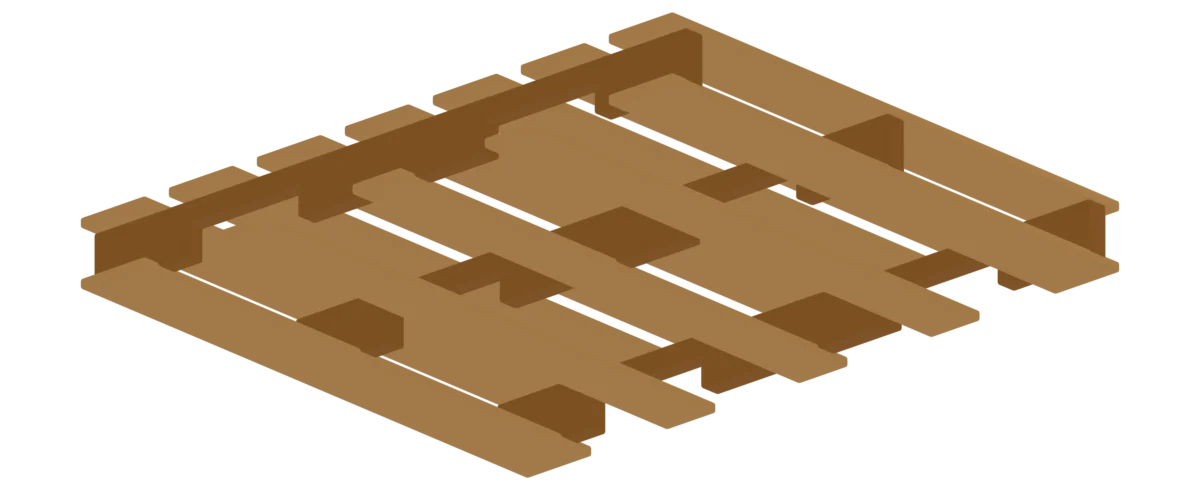
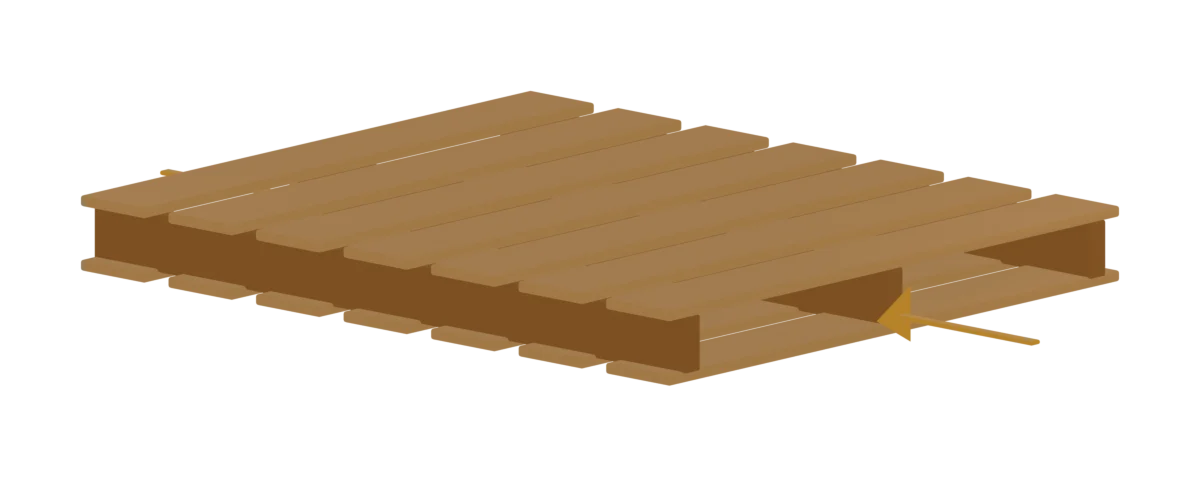
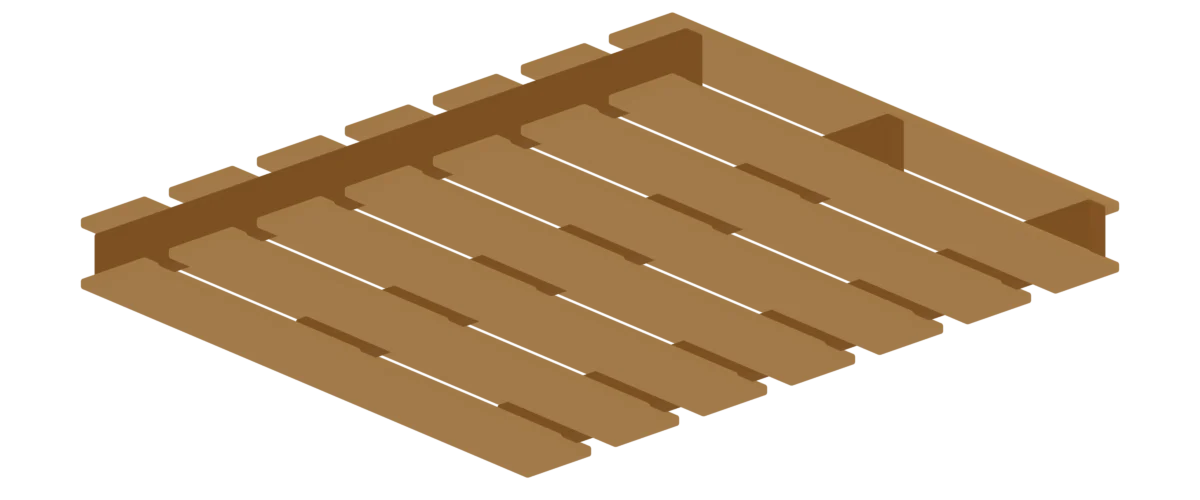
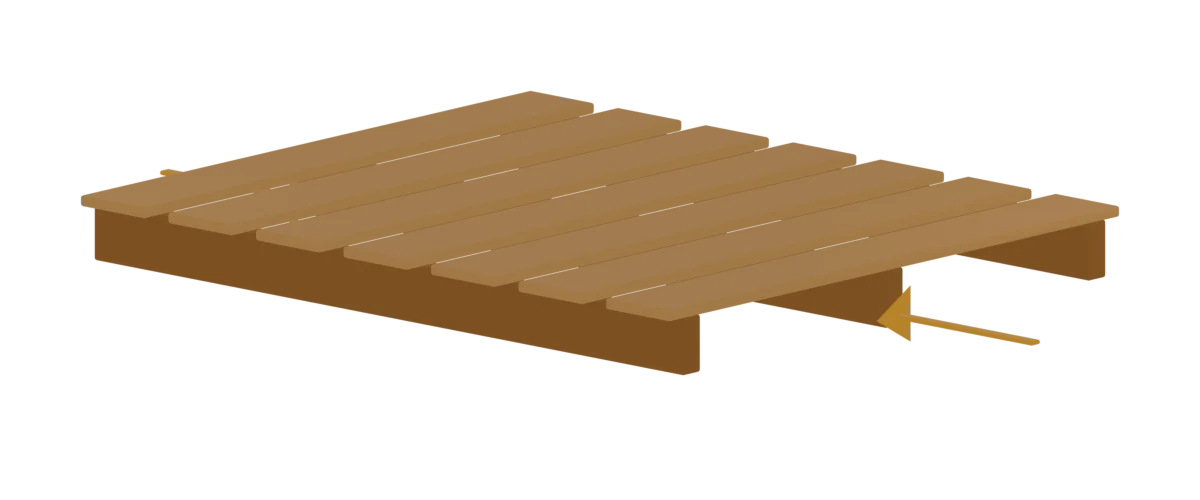
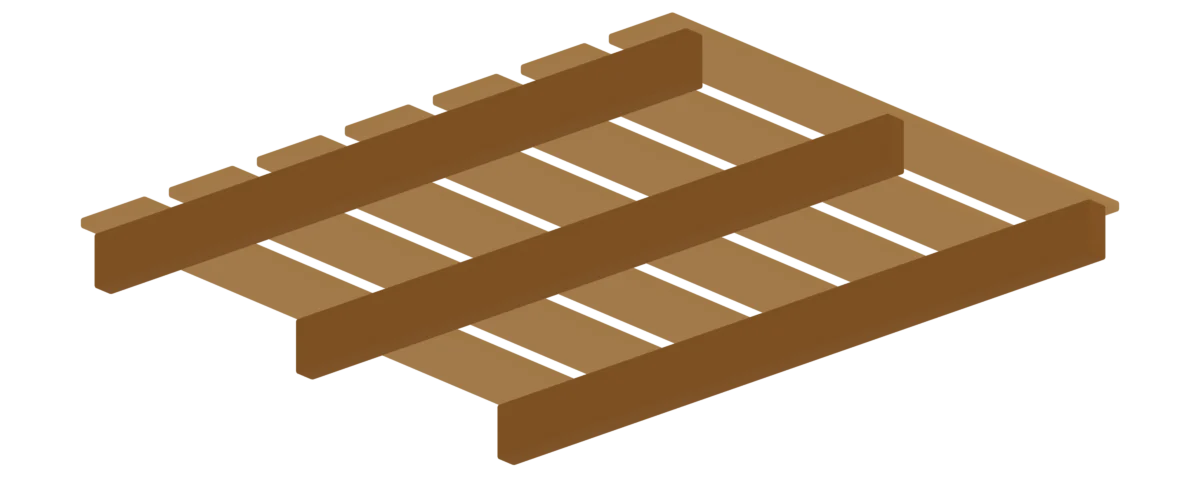
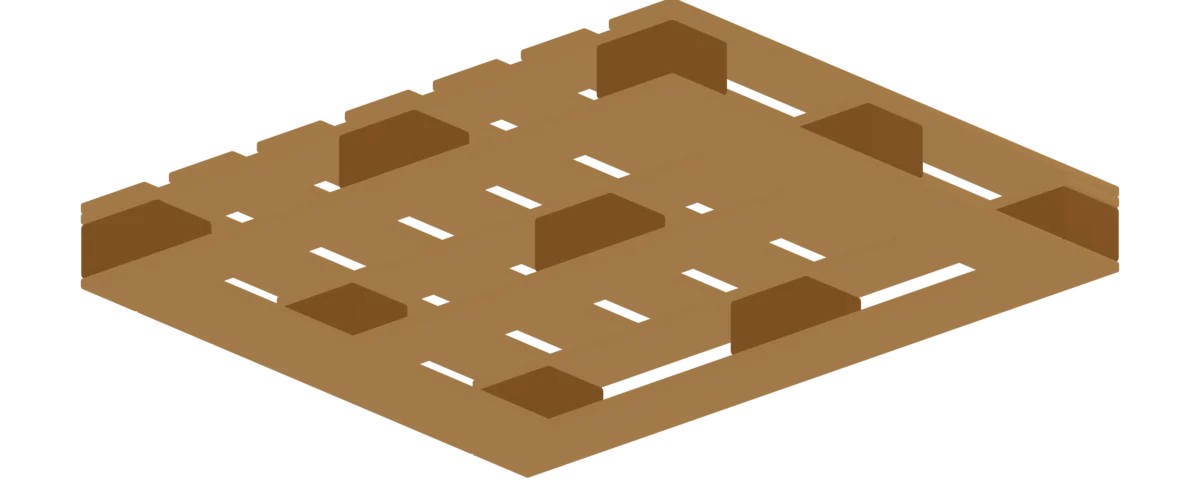
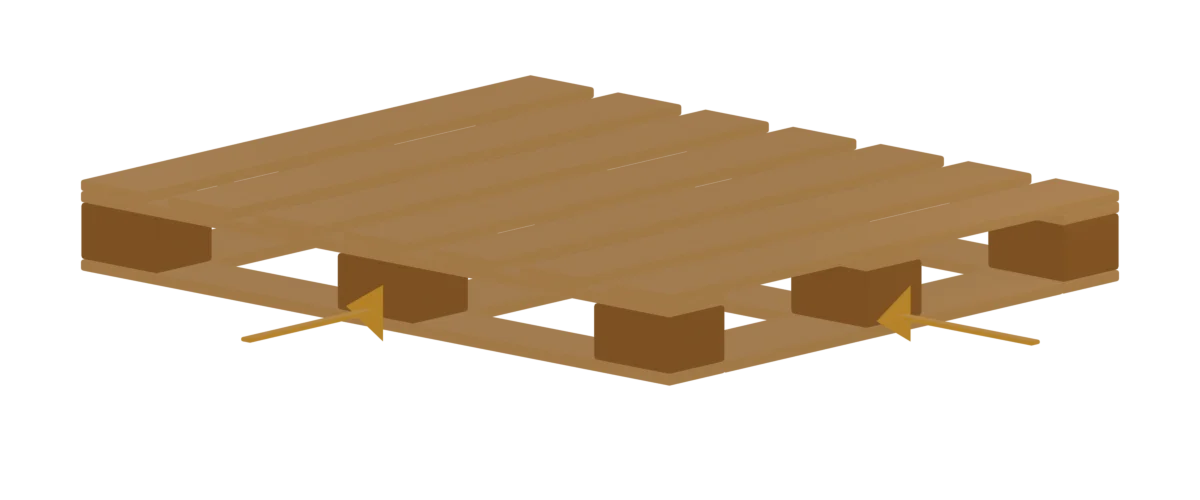
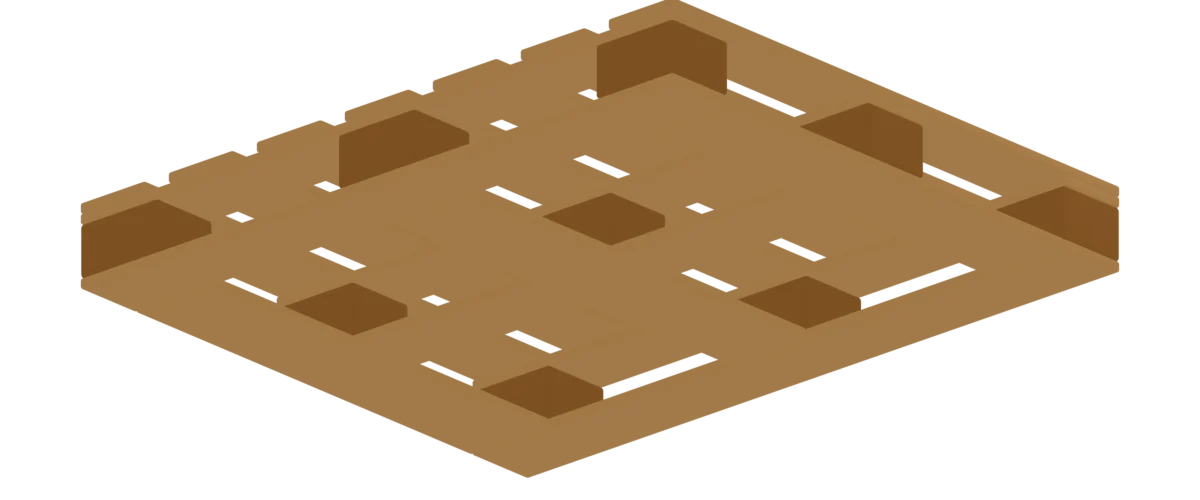
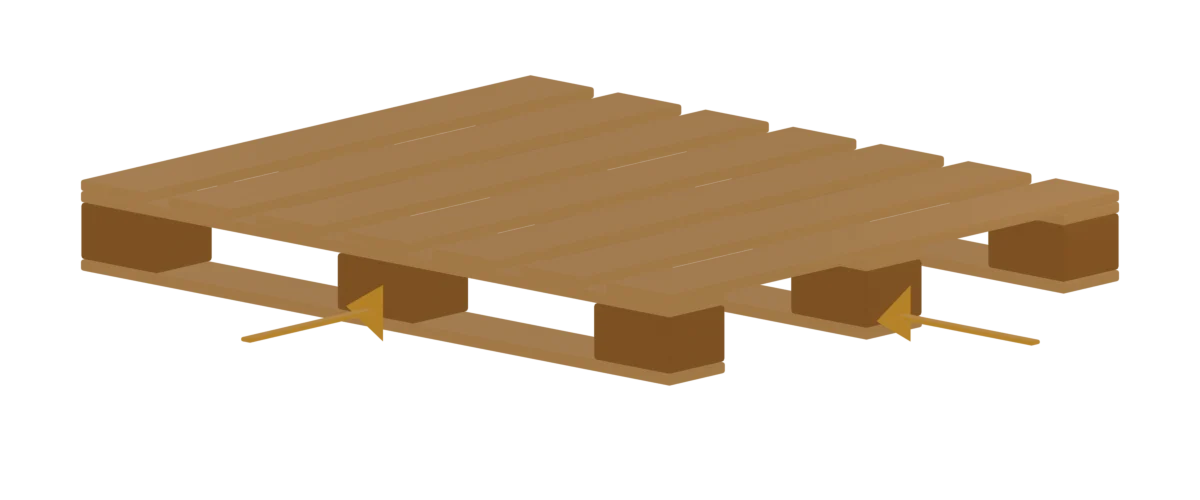
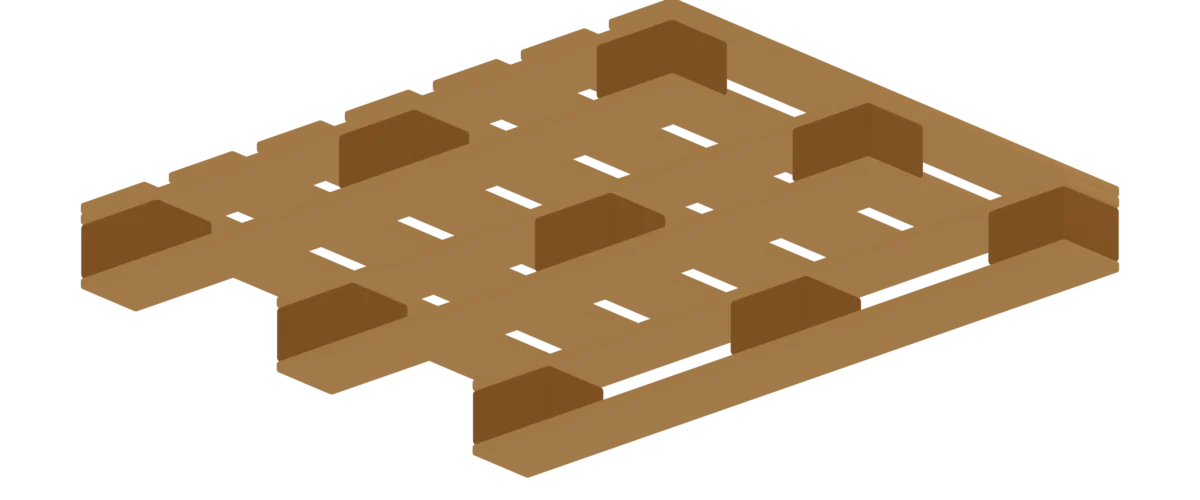
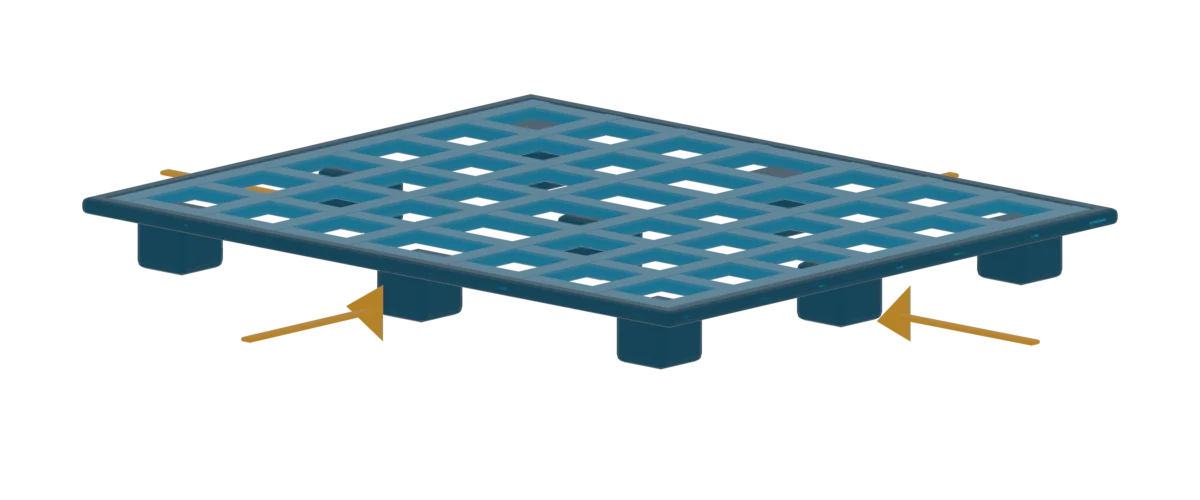
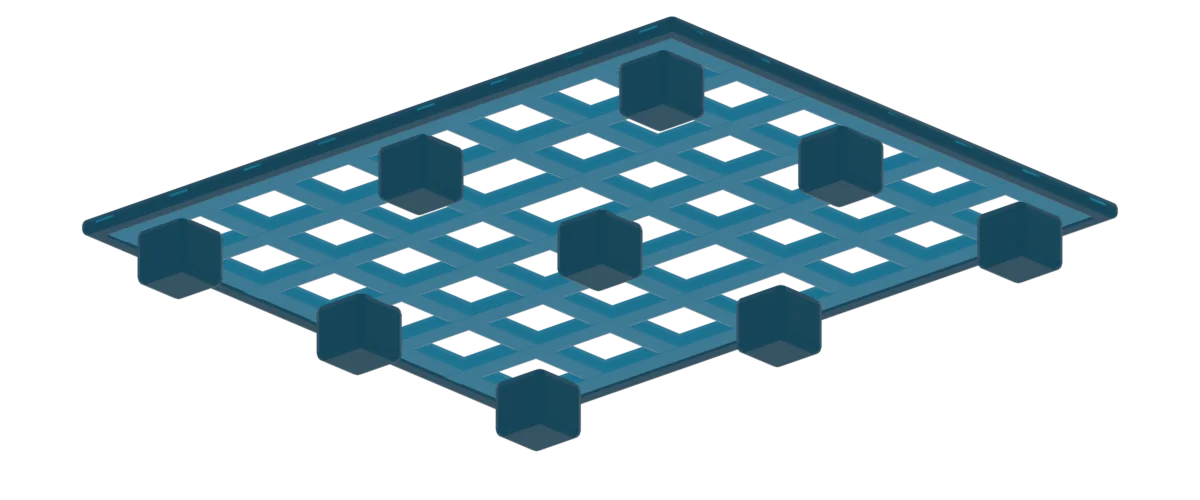
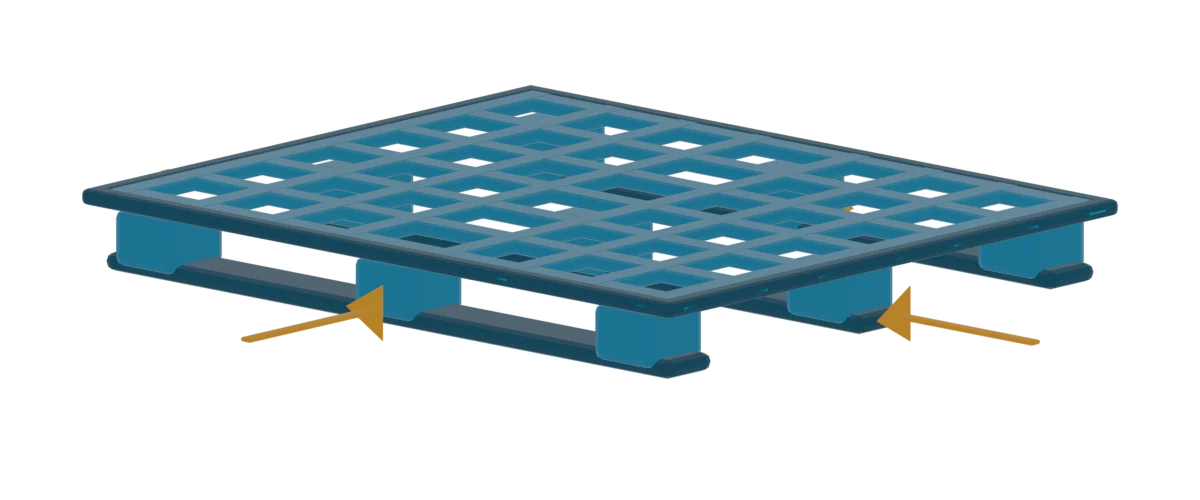
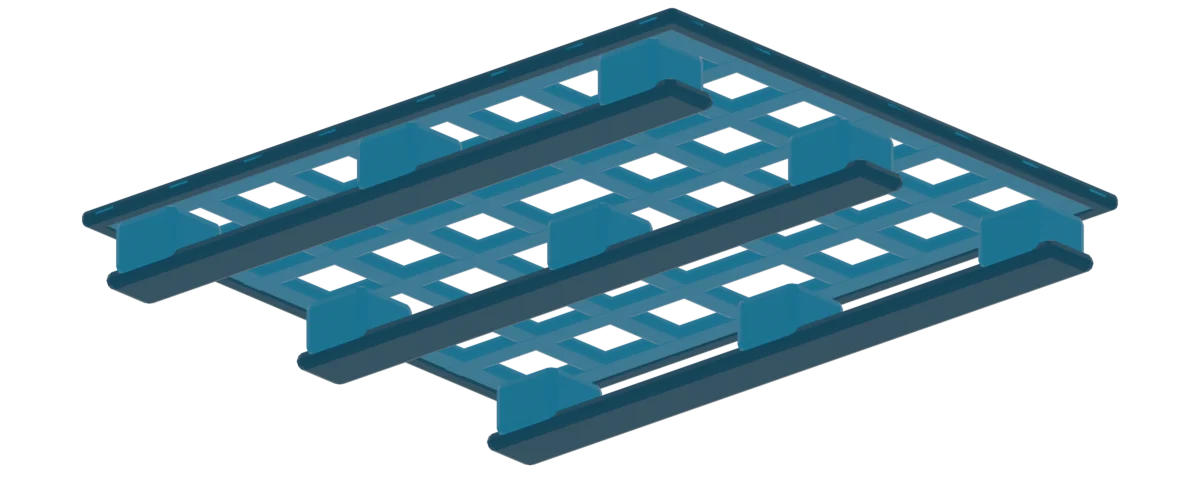
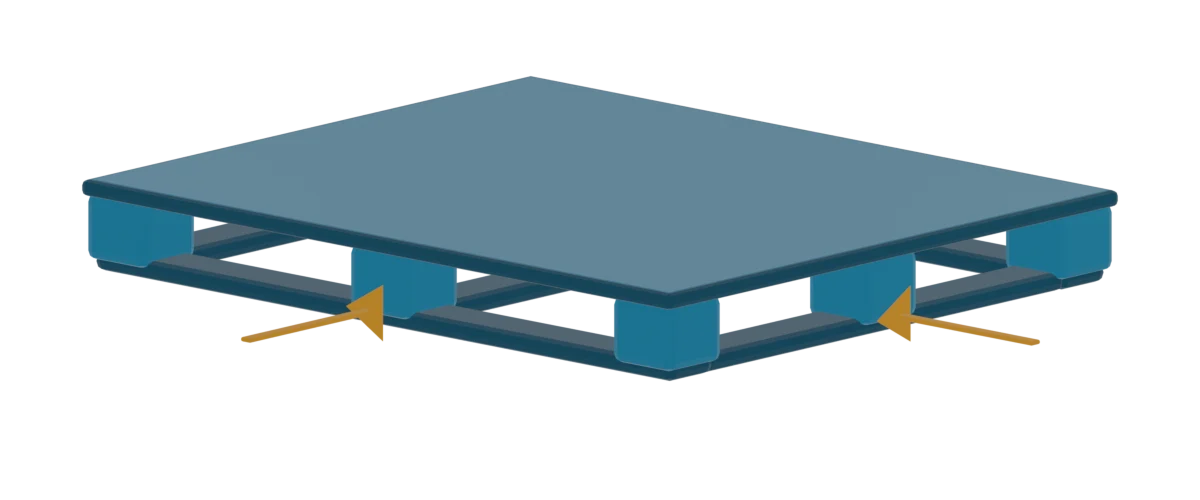
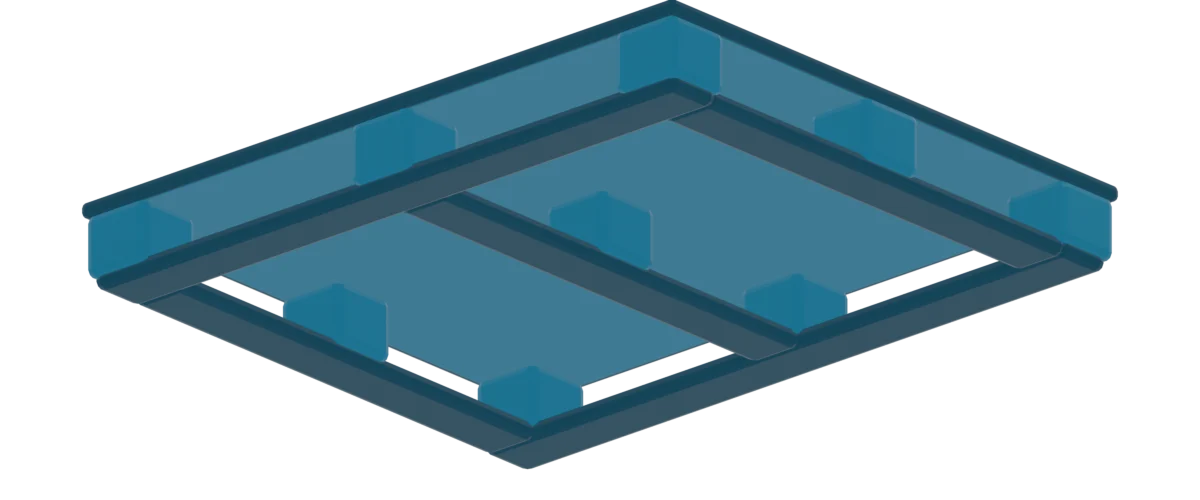
Bottom patterns affect pallet-jack access, beam support, conveyor tracking, block stacking, nesting, repair cost and wash-down drainage. Ask for an underside drawing when the pallet must work with automation or racking.
Repairable and widely available, with many stringer and block configurations. Solid-wood packaging used in international trade may fall within ISPM 15.
Molded in nestable, runner and perimeter-base forms. Deck, reinforcement and support conditions determine rackability—not the material name alone. Compare plastic pallet builds.
Used where long life, high temperatures or specific heavy-duty applications justify the tare, cost and handling implications. Ratings remain product-specific.
Often considered for one-way or weight-sensitive shipments. Moisture, concentrated loads and handling conditions must match the design.
Nestable, stackable and rackable are performance or configuration terms, not synonyms. Feet may nest into the pallet above to reduce empty-stack height. A stackable base sits stably on another unit. A rackable pallet is designed and rated for a stated unsupported span and load condition.
A heat-treated pallet is still a stringer, block or other build. “HT” describes an approved treatment under a phytosanitary system; it does not identify the footprint, entry, grade, rack rating or ownership.
For international moves, start with the export pallet guide, then check whether the destination and packaging material place the shipment within ISPM 15. The heat-treated pallet guide explains what a legitimate mark communicates and why kiln-dried is not a substitute term.
Regional footprints are useful starting points, but named systems make the construction meaningful. CHEP’s North American 48 × 40 inch pooled wood pallet is a block pallet with true four-way entry and a full-perimeter base. A classic grocery-style 48 × 40 build is often a notched-stringer pallet with partial four-way entry. EPAL 1 is a specified nine-block 800 × 1,200 mm exchange pallet. The common Australian 1,165 mm square pallet can be a three-bearer, two-way build—proof that a square plan does not imply four-way entry.
Use the site’s regional dimensions as named examples, not as permission to infer a universal bottom, height or rating from a country name.
Sources checked November 14, 2026. Illustrations are neutral educational models, not certification drawings or endorsements.
Use the published example as a starting point, then enter the actual footprint and empty height for your load.